

What to Do if Your Septic System Backs Up in Your Home
January 29, 2026

Backup happening right now? Stop using water and call 423-605-1612. We're open 24 hours a day, 7 days a week.
Sewage backing up into a tub, shower, or toilet is one of the most stressful things a homeowner can deal with. It's unpleasant, it can be a health risk, and it can damage your home if it isn't handled quickly. Taking the right steps in the first few minutes limits the damage and helps get the problem fixed faster.
What to Do Right Now
Stop using water. Don't flush, run the sinks, shower, or start the dishwasher or washing machine. Every gallon adds to the backup.
Keep everyone away from the sewage. Sewage carries bacteria. Keep children and pets out of the area, and wear rubber gloves and boots if you have to go in.
Open windows and doors. Fresh air helps with odors while you wait for help.
Check how many drains are affected.
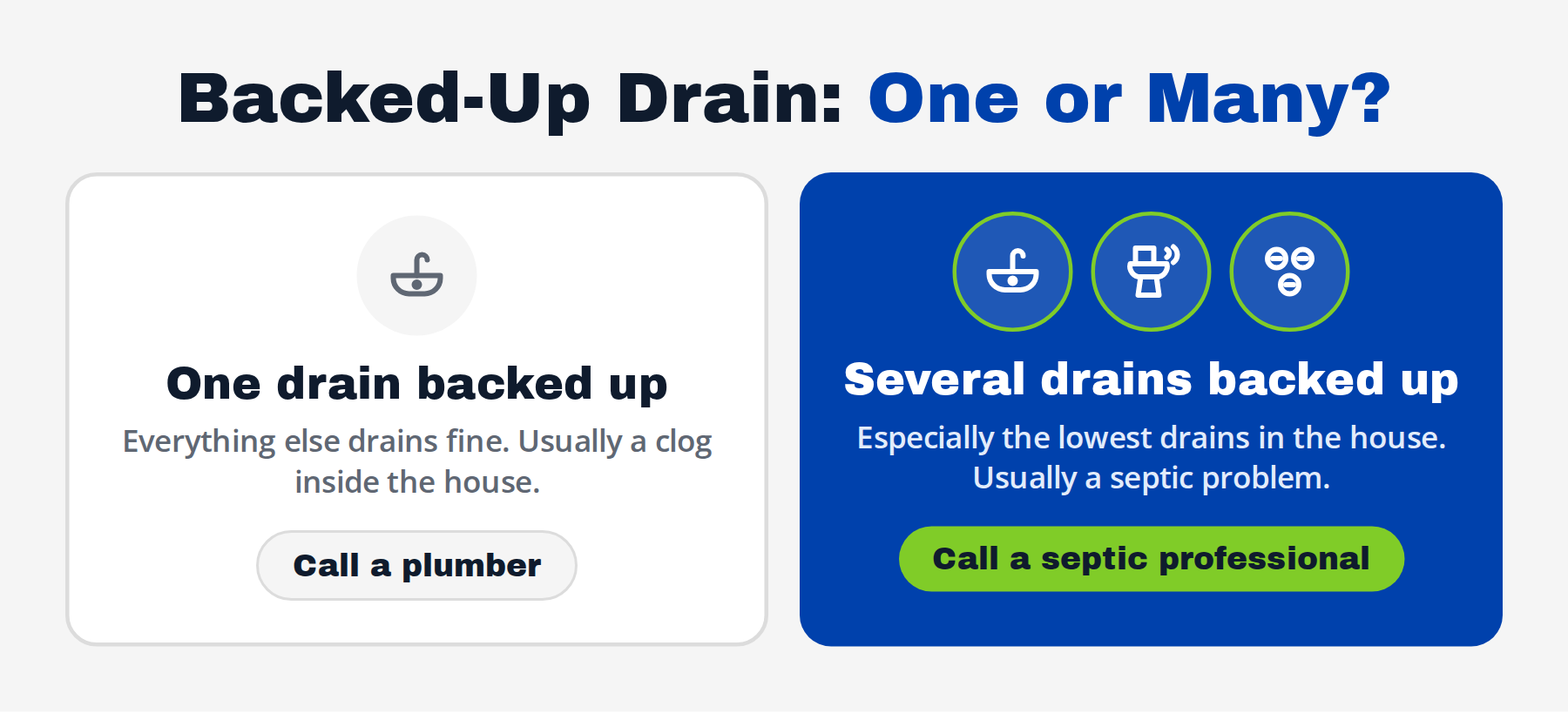
One clogged drain is often a plumbing problem inside the house. Several drains backing up at once usually points to the septic system.
Don't open the septic tank. Septic tanks can hold dangerous gases, and an open tank is a serious fall risk. Leave the tank to a professional.
Call a septic professional. A backup that involves the septic system needs to be found and fixed at the source.
One Drain or Many? How to Tell Where the Problem Is
| What you're seeing | What it usually means | Who to call |
|---|---|---|
| One sink, tub, or toilet is backed up, and everything else drains fine | A clog in that fixture or its drain line inside the house | A plumber |
| Several drains are slow or backing up at the same time, especially the lowest ones in the house | A problem in the septic system: a full tank, a blocked line to the tank, or a struggling drain field | A septic company |

What Causes a Septic Backup?
- A full tank. When a tank goes too long between pumpings, there's no room left for wastewater.
- A blocked line or baffle. Wipes, grease, or roots can clog the pipe from your home or the fittings that guide water into and out of the tank.
- A failing drain field. If the field lines can't absorb water, it has nowhere to go but back toward the house.
- Heavy rain. When the ground over the drain field is soaked, the system can't drain as fast as usual.
- Too much water at once. Several loads of laundry or a house full of guests can overwhelm the system.
What Happens When You Call Us
We find the cause before recommending anything. Depending on what's wrong, that might mean pumping the tank, clearing a blocked line, or repairing part of the system. We'll explain what we found in plain language, give you upfront pricing, and tell you whether a repair will do the job before we talk about replacing anything. Even if the drain field is struggling, up to 90% of field lines can be repaired.
After the Backup: Cleaning Up Safely
Once the septic problem is fixed, the affected area needs a thorough cleanup. Household cleaners alone may not be enough for sewage. For anything more than a small spill, consider a professional cleanup and restoration company, and don't ignore lingering odors or dampness, which can lead to mold and long-term damage.
How to Prevent Future Backups
- Pump your tank on a regular schedule. Most homes need it every few years.
- Keep wipes (even "flushable" ones), grease, and paper towels out of your drains.
- Spread laundry and other heavy water use across the week.
- Keep cars and heavy equipment off the drain field.
- Schedule an inspection if you notice slow drains, gurgling, or odors.
When to Call Right Away
Call for emergency septic service if:
- Sewage is backing up into more than one drain
- There's standing wastewater in your home
- Strong sewage odors won't go away
- The backup comes back after the tank was pumped
Septic Backup FAQ
Can I keep using the toilet during a backup?
No. Every flush adds more wastewater to a system that can't take it, which makes the backup worse. Stop using water until the problem is fixed.
Will pumping the tank fix a backup?
Sometimes. If the tank is simply full, pumping may solve it. But if the backup comes from a blocked line or a struggling drain field, pumping alone won't fix it, which is why finding the cause matters.
Why did my system back up after heavy rain?
When the soil over your drain field is soaked, the field lines can't absorb water as quickly. Cutting back on water use often helps until the ground dries. If the backup continues after that, have the system checked.
Get Help Day or Night
A septic backup needs quick action, and we're here for it. Rick's Septic of Chattanooga has helped homeowners across Chattanooga and Hamilton County since 1992, and we're open 24/7.
SHARE THIS