How to Find Your Septic Tank: A Step-by-Step Guide
October 9, 2026
Most septic tanks are buried with no visible lid, and plenty of homeowners have never seen theirs. That's fine until the tank needs pumping, an inspection, or a repair, and nobody knows where to dig.
The Short Version
Check for system drawings, find where the main drain pipe leaves your house, follow its direction into the yard, and look for clues like a raised spot, a cleanout pipe, or grass that grows differently. If you still can't find it, a septic company can locate the tank and uncover the lid for you.
Why it Pays to Know Where Your Tank Is
Faster, easier service. Septic pumping, inspections, and repairs all start with getting to the tank.
Protecting the system. You'll know where not to park, build, or dig.
Planning yard projects. Fences, patios, sheds, and gardens need to stay clear of the tank and field lines.
Peace of mind in an emergency. If your system backs up, knowing where the tank is saves time.
How to Find Your Septic Tank, Step by Step
Step 1: Check Your Paperwork
Start with any system drawings, service receipts, or records that came with your home. A diagram or a past pumping receipt may show where the tank is, or at least which side of the house it's on.
Step 2: Find Where the Main Drain Leaves Your House
In a basement or crawlspace, look for the large pipe that collects wastewater from the toilets, sinks, and tubs. Note which wall it goes through. Outside, a short pipe with a cap sticking out of the ground near the house (a cleanout) is another clue to where the line runs.
Step 3: Follow That Direction Into the Yard
The septic line usually runs fairly straight from where it leaves the house to the tank, which normally sits several feet out into the yard. Walk out from that side of the house and focus your search there.
Step 4: Look for Clues in the Yard
- A slightly raised mound or a sunken spot
- Grass that's greener, thinner, or grows differently than the rest of the lawn
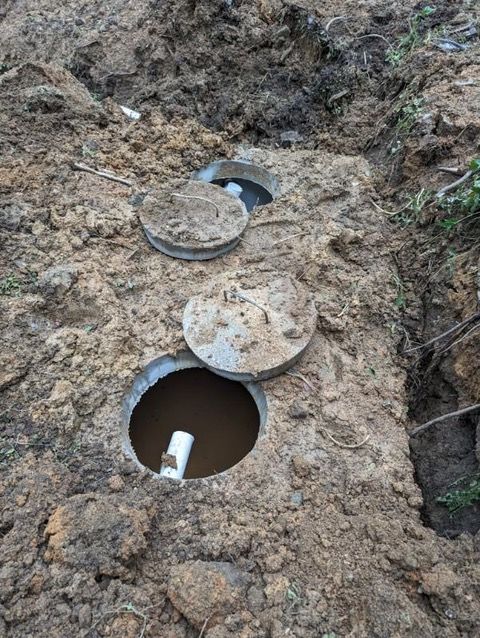
- A round or square lid, a riser, or a plastic cap at ground level
- A pipe or cap sticking out of the ground, which may be an inspection port
- A spot where frost melts first on a cold morning
Step 5: Probe Gently (Optional)
Some homeowners use a thin metal rod to gently push into the soil along the line's path, feeling for the hard top of the tank. If you try this, go slowly, push straight down, and never force it. Stop if you hit anything, and never use a shovel or machine to dig around where you think the tank or pipes are.
Step 6: Call a Septic Tank Locating Pro
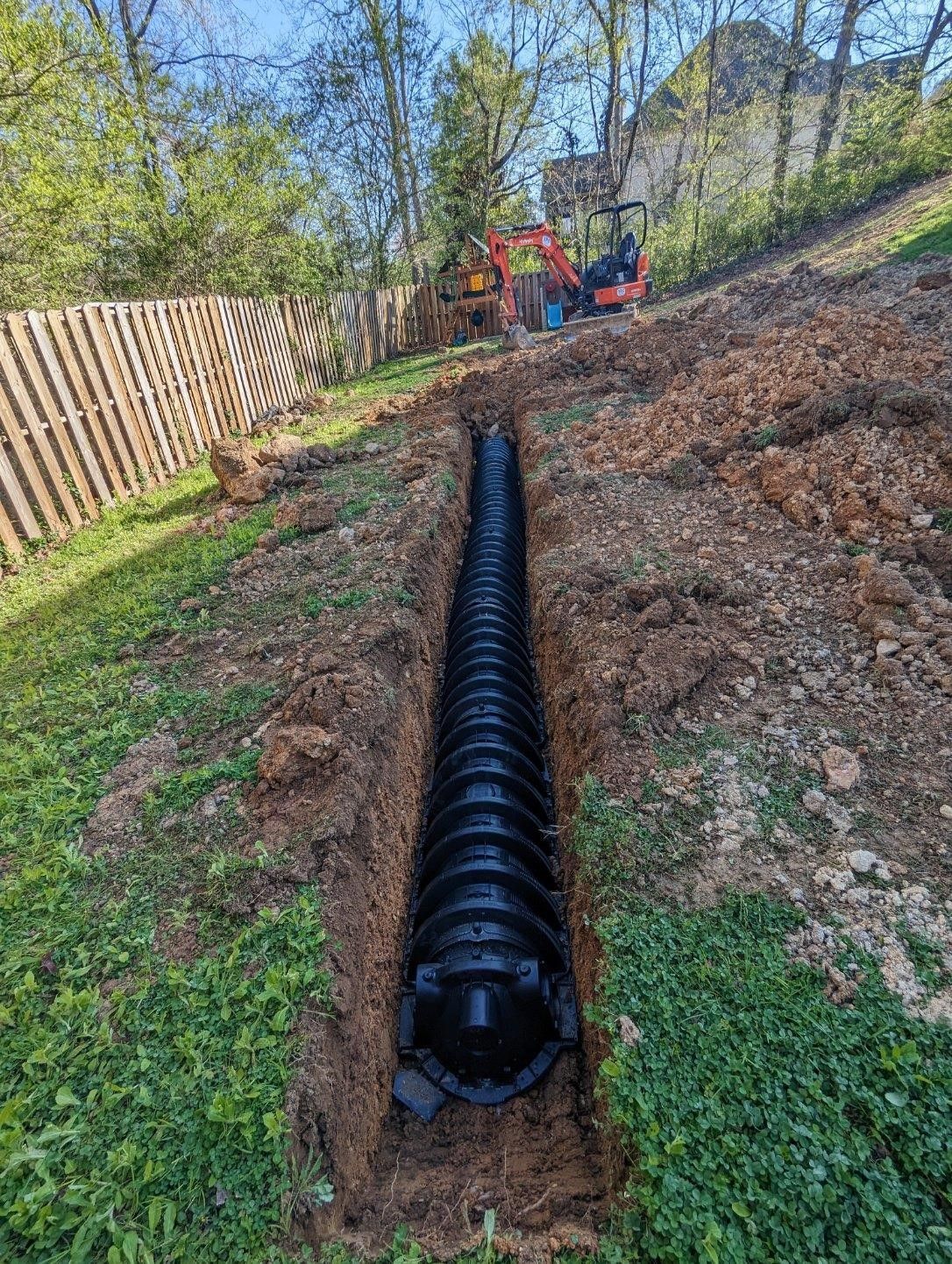
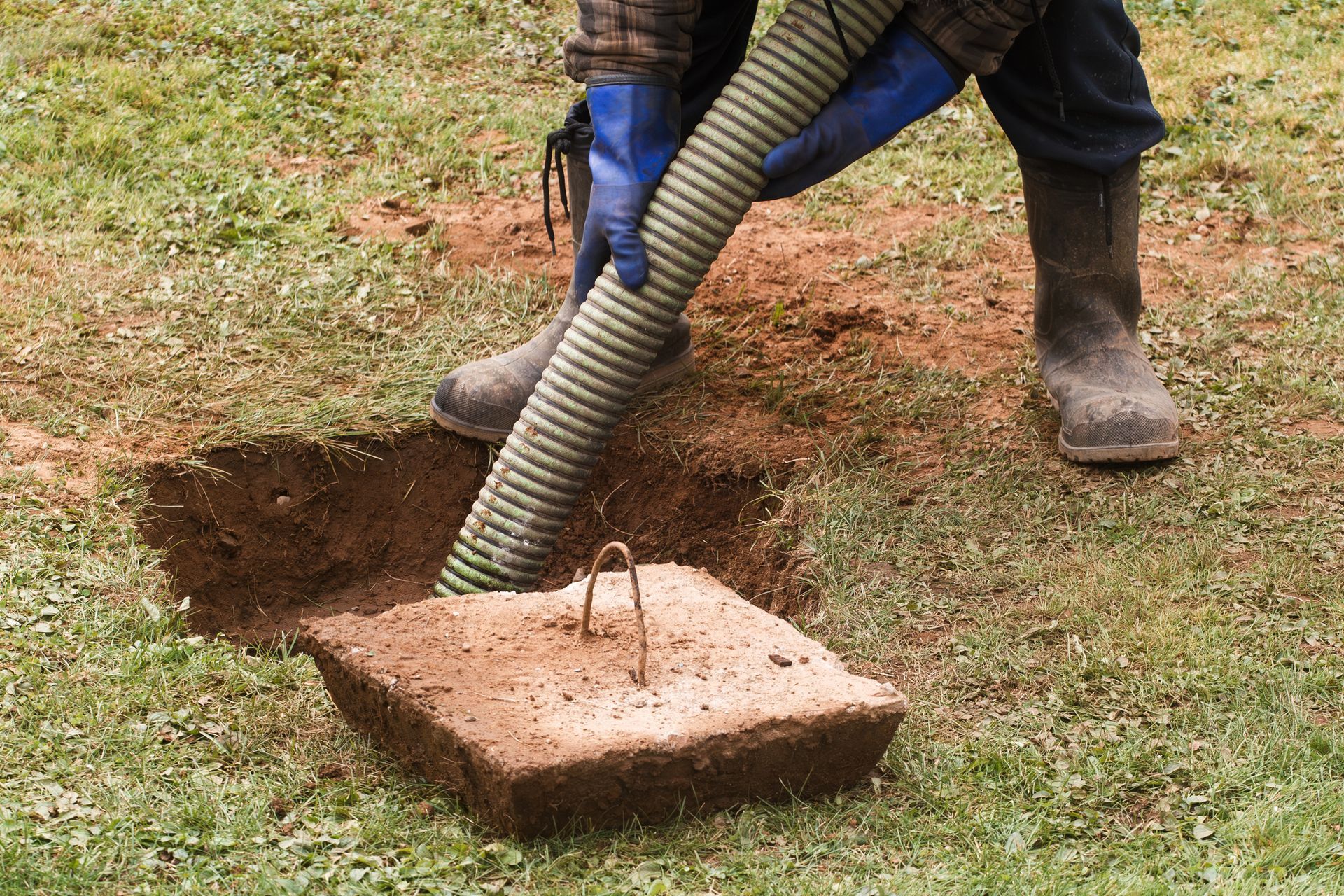
If you still can't find it, or you'd rather not dig around buried pipes, a septic company can locate the tank and uncover the lid for you. We offer septic tank locating as part of our digging and excavation service, so the tank is ready for pumping, an inspection, or a repair.
Stay Safe While You Search
Never open the tank lid. Septic tanks can hold dangerous gases, and an open tank is a serious fall risk, especially for kids and pets.
Don't dig with machinery. A shovel or an excavator can crack a tank lid or break a pipe in seconds.
Call 811 before you dig.
It's the free national call-before-you-dig line, and it gets underground utility lines like gas, water, and electric marked so you don't hit them.
Keep vehicles off the area.
The weight of a car or truck can damage a tank or field lines.
Once You Find It
Mark it. Put a stake, a stepping stone, or a small garden marker over the lid.
Sketch a map.
Measure from two fixed points, like the corners of your house, and keep the sketch with your home records.
Write down the date.
Note when the tank was last pumped, and start a simple maintenance log.
Keep the area clear.
Don't build over the tank or plant anything but grass over it and the field lines.
When to Call a Professional
Call us if:
- You've tried the steps above and still can't find the tank
- The tank is buried deep or under a hard surface
- Your system is backing up or showing warning signs and you need it found fast
- You'd rather not dig around buried pipes yourself
We're open 24/7, and every quote is free and done on-site.
Septic Tank Locating FAQ
Where is a septic tank usually located?
Most tanks sit several feet out from the house, in line with where the main drain pipe leaves the home. They're usually in the backyard or side yard, but every property is different.
How deep is a septic tank buried?
It varies. Some tanks sit just under the surface, while others are buried a few feet down.
Can I find my septic tank with a metal detector?
Sometimes. Some tanks have metal handles or reinforcing bar in the lid that a metal detector can pick up, but many don't, so it isn't a reliable method on its own.
Why can't I see my septic tank lid?
Most tank lids are buried under soil and grass. Some homeowners add a riser, a plastic extension that brings the lid up to ground level, so the tank is easier to reach for future service.
Need Help Finding Your Tank?
If you can't find your septic tank, you're not alone. Rick's Septic of Chattanooga has helped homeowners across Chattanooga and Hamilton County since 1992, and our septic tank locating service finds the tank and uncovers the lid so it's ready for whatever comes next.
Call
423-605-1612 any time, or
request a free on-site quote online.
SHARE THIS
Latest Posts